We are just now into our third week of school, and we have already learned so much in 5th grade digital literacy!
The students have been working in all of our different Beginning Bytes (our warm-ups), and have been learning how to log into different programs using their school Google account. We have been working in:
-Readworks
-Typing Club
-Code.org
-Quizlet.com
If you happen to have computer access at home, you are welcome to follow the links above, and work with your student on any of these different warm-up activities. This first couple of weeks, we have also been working on using Google Classroom. Google classroom allows students to see a stream of their assignments when they log into their Chromebooks and get into their classroom. Many of the teachers have been using Google Classroom, and it helps the students stay on top of their work. If you would like to see more of your students work through Google Classroom, you are welcome to email me and I can walk you through how you enroll as a parent or guardian in the same class as your student.
This week, we finished our first projects in 5th grade, the "My Favorite Technology" slideshows using Google Slides. The students shared their slideshows with the students at their table groups, and wrote a reflection on the process. Many of these slideshows are great, and I have included links to a few of these below.
Hour 2 Example
Hour 1 Example
Hour 3 Example
Last but not least, this week we will be starting our unit on Digital Citizenship. It is so important in this digitally driven world to learn about how to be safe, responsible and respectful. Today, we started by brainstorming the differences between offline and online communities. I heard many great ideas from your students! This unit will include many great tips to becoming good digital citizens while working with computers and other technology.
As always, you are welcome to call or email me with any questions you may have!
Tuesday, September 17, 2019
Wednesday, August 28, 2019
Welcome to 5th Grade Digital Literacy!
I can hardly believe that the beginning of the 2019-20 school year is just around the corner! I am so
excited to meet all of my new 5th grade students!
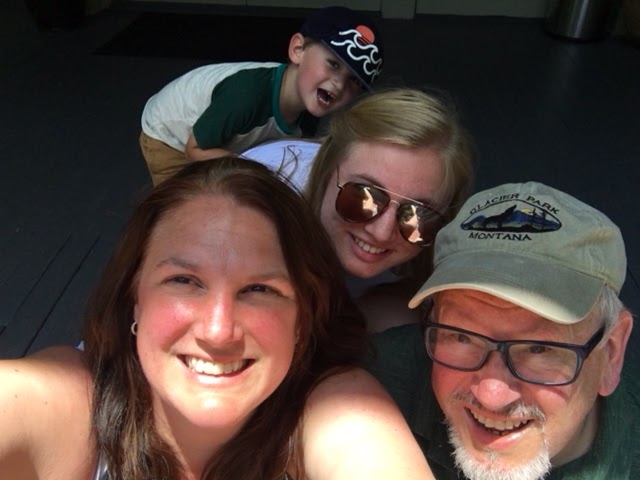
A short introduction of myself: My name is Angela Flickinger-Pierce, and this is my second year of teaching at the Deforest Area Middle School. I love it here! I love the students, the other teachers, the community, the parents, I just love everything about being here! Before I was a teacher, I worked as a Marketing and Fund Development Director for non-profits in the Madison area. I realized my true passion was working with children, and I went back to school to become a teacher. I was certified in 2018, and just completed my Masters of Education this past May. I live in Poynette with my husband, daughter, son, chihuahuas and chickens. My human family (minus chickens and chihuahuas) can be seen below!

Your student will have Digital Literacy for one quarter. During the quarter we will explore:
Your student will have Digital Literacy for one quarter. During the quarter we will explore:
-Digital Citizenship, or learning how to be safe online
-Coding, using Tynker and Code.org
-Robotics
-Graphic Design
-Engineering Design Process
We will also work on everyday skills such as vocabulary, typing, collaboration, reading comprehension, and becoming learners that problem-solve, think creatively and know how to independently attack whatever work we are doing. Digital Literacy is a Standards Based class, meaning that the grades earned in this class show what we are able to do according to a standard or skill. The standards used for grading in this class are the ISTE Standards, or International Society for Technology Education linked here. We will start our quarter by breaking apart these standards, and thinking about what each of these standards means. Every project completed by your student will include a rubric outlining the ISTE standards that they will be graded on. You may have questions about these standards-please feel free to ask!

I will be sending a parent letter home with your students on the first day of class with some other basic information about homework, missing assignments, one-on-one mentoring or tutoring time, and grades. Additionally, I will be sending home a document with a Digital Literacy Wish List and Volunteer form. I welcome anyone willing to give their time, from ten minutes to hours! If you are at all interested in getting involved in the classroom, please fill out the form. I have linked the form here as well.
Finally, as we start out this new and fresh school year, I just want to say that your student's hopes, dreams, happiness, comfort and sense of self is my first priority. If there is anything that you would like me to know about your student, please reach out! I am here before and after school and can be reached by email and phone. It's going to be a great year!
-Coding, using Tynker and Code.org
-Robotics
-Graphic Design
-Engineering Design Process
We will also work on everyday skills such as vocabulary, typing, collaboration, reading comprehension, and becoming learners that problem-solve, think creatively and know how to independently attack whatever work we are doing. Digital Literacy is a Standards Based class, meaning that the grades earned in this class show what we are able to do according to a standard or skill. The standards used for grading in this class are the ISTE Standards, or International Society for Technology Education linked here. We will start our quarter by breaking apart these standards, and thinking about what each of these standards means. Every project completed by your student will include a rubric outlining the ISTE standards that they will be graded on. You may have questions about these standards-please feel free to ask!
I will be sending a parent letter home with your students on the first day of class with some other basic information about homework, missing assignments, one-on-one mentoring or tutoring time, and grades. Additionally, I will be sending home a document with a Digital Literacy Wish List and Volunteer form. I welcome anyone willing to give their time, from ten minutes to hours! If you are at all interested in getting involved in the classroom, please fill out the form. I have linked the form here as well.
Finally, as we start out this new and fresh school year, I just want to say that your student's hopes, dreams, happiness, comfort and sense of self is my first priority. If there is anything that you would like me to know about your student, please reach out! I am here before and after school and can be reached by email and phone. It's going to be a great year!

Friday, May 3, 2019
A Robot Chassis is born...to drive!
It has been a great week here in Digital Literacy! Most of our groups have built the chassis of their robot, and have begun practicing the very tricky racetrack in our room designed by the students themselves. The color sensors on the robots stop the chassis when they run over the color red-which is why our room is taped up with red duct tape! The students have been very excited to finally drive their creations, and this week was practice week in preparation for their race next week.
Besides all the robotics that we have been doing, we have continued to work on our fundamental skills of vocabulary, typing, and reading comprehension. This week we worked on an article about scientists who study tornadoes. Some of the students were wondering how that tied into robots, and we had a great discussion about the purpose of robots, and how scientists might be able to collect data in a safer way during a storm with the help of a robot that could be guided by someone who is farther away from a tornado. We all agreed that it is best to be FAR away from tornadoes if possible!!!!
If there are any parents that might like to come and help with our robot race, please let me know! I am sure the students would love to have an audience. They are very proud of the work that they have been doing.


Besides all the robotics that we have been doing, we have continued to work on our fundamental skills of vocabulary, typing, and reading comprehension. This week we worked on an article about scientists who study tornadoes. Some of the students were wondering how that tied into robots, and we had a great discussion about the purpose of robots, and how scientists might be able to collect data in a safer way during a storm with the help of a robot that could be guided by someone who is farther away from a tornado. We all agreed that it is best to be FAR away from tornadoes if possible!!!!
If there are any parents that might like to come and help with our robot race, please let me know! I am sure the students would love to have an audience. They are very proud of the work that they have been doing.


Thursday, April 25, 2019
Having fun with Robots!!!!!
It has been a little while since I last posted a blog update. I apologize for not keeping up to date! So much is going on here! With the warmer weather, it seems like we are racing towards the end of the year, and it is hard to keep up!
We have been working on Robots for the past few weeks now. There has been so much excitement with the building and testing of our sensors. To build our testbed in class, we were assigned our Robotics teams, and we moved to new spots. Every team was able to pick their own name, and we had some fun ones. The testbed we built helped us learn how to work as a group, and was good practice working on a team, listening, cooperating, and compromising when it comes to building our robots together. We also talked about our personal responsibility for making sure we do not lose or damage our robotics parts. There were some great discussions on ways that we can work together to take care of these great robot kits!
We have also been discussing the different between an INPUT and an OUTPUT. Our robots come with a touch sensor and a color sensor. We tested what each of these sensors did and what information was going into the system, and what was happening next. As we build our robots, we will be thinking about these INPUTS and OUTPUTS and how they are helping our robots work.
This week, we started building the chassis to our robot. The chassis is the base of the robot that has the wheels and supports the same way a car chassis holds up a car. It has been great seeing how the students are working together and are excited about what they are creating! Below are a few pictures from all of my classes. Ask your students about their work! They love to share!


We have been working on Robots for the past few weeks now. There has been so much excitement with the building and testing of our sensors. To build our testbed in class, we were assigned our Robotics teams, and we moved to new spots. Every team was able to pick their own name, and we had some fun ones. The testbed we built helped us learn how to work as a group, and was good practice working on a team, listening, cooperating, and compromising when it comes to building our robots together. We also talked about our personal responsibility for making sure we do not lose or damage our robotics parts. There were some great discussions on ways that we can work together to take care of these great robot kits!
We have also been discussing the different between an INPUT and an OUTPUT. Our robots come with a touch sensor and a color sensor. We tested what each of these sensors did and what information was going into the system, and what was happening next. As we build our robots, we will be thinking about these INPUTS and OUTPUTS and how they are helping our robots work.
This week, we started building the chassis to our robot. The chassis is the base of the robot that has the wheels and supports the same way a car chassis holds up a car. It has been great seeing how the students are working together and are excited about what they are creating! Below are a few pictures from all of my classes. Ask your students about their work! They love to share!


Wednesday, February 6, 2019
We are coding an Ecosystem? What???
It has been hard to get back into our daily routine with all the snow days, but we are getting there! There is so much learning that still needs to be done, so it is best if we just get at it!
This week in 5th Grade Digital Literacy, we have continued to work on our coding projects in Tynker. For extra practice, a few classes have worked on debugging existing code in Tynker for the Groggy Groundhog Day project. Debugging gives the students a valuable experience of looking at existing code and problem-solving to find out what went wrong. Also, it was fun to see the debugged program predict an early spring!
We have also started to code our Dino Ecosystem. This program is tricky, as we are working on parameters that have user input. This means that if you pick up the finished code, you as the person using the program, will have to put in different numbers for our parameters. In our Dino Ecosystem, that means that the user gets to pick the number of bushes, the number of t-rex, and the number of triceratops!
In class, we have also been working on our vocabulary skills. Many of the words that we are studying, can be helpful in other classes. Some of the students are struggling with words such as simulation, programming, platform, and modeling. Quizlet is the fun and interactive way that we work with our vocab, and can be accessed at home or at the public library. Consider giving your student a chance for some extra vocab practice! They can race your time on the Match vocabulary game (just ask your student about it...they will tell you all about it, as well as their fastest score!)
In a few weeks, we will be starting on the Robotics unit. I will be sending out a parent letter by email regarding the framework, and some classroom expectations. Please watch for that email, and contact me with any questions that you might have!
This week in 5th Grade Digital Literacy, we have continued to work on our coding projects in Tynker. For extra practice, a few classes have worked on debugging existing code in Tynker for the Groggy Groundhog Day project. Debugging gives the students a valuable experience of looking at existing code and problem-solving to find out what went wrong. Also, it was fun to see the debugged program predict an early spring!
We have also started to code our Dino Ecosystem. This program is tricky, as we are working on parameters that have user input. This means that if you pick up the finished code, you as the person using the program, will have to put in different numbers for our parameters. In our Dino Ecosystem, that means that the user gets to pick the number of bushes, the number of t-rex, and the number of triceratops!
In class, we have also been working on our vocabulary skills. Many of the words that we are studying, can be helpful in other classes. Some of the students are struggling with words such as simulation, programming, platform, and modeling. Quizlet is the fun and interactive way that we work with our vocab, and can be accessed at home or at the public library. Consider giving your student a chance for some extra vocab practice! They can race your time on the Match vocabulary game (just ask your student about it...they will tell you all about it, as well as their fastest score!)
In a few weeks, we will be starting on the Robotics unit. I will be sending out a parent letter by email regarding the framework, and some classroom expectations. Please watch for that email, and contact me with any questions that you might have!
Sunday, January 27, 2019
Playing Dodgeball in Tynker!
Tomorrow's snow day has given me the perfect opportunity to reflect back on our past week of 5th Grade Digital Literacy. Last week, we finished up our Dodgeball games that we coded in Tynker using our tablets. We have continued to practice good Pair Programming rules, and the process of working together to create code is becoming more natural to the students.
The Dodgeball games were a great way to introduce Tynker to the students. Each pair added actors, or the characters, a background and another object such as a treasure chest. Each "actor" needing coding, and the students worked to have their characters move about the screen of the tablet when the tablet is being tilted. We had a great discussion about the gyroscope sensor in the tablets and in smart phones. It is what makes the tablet know that it is being tilted, and therefore, makes the game possible! Ask your student about how this works and see what they have to say!
Our Dodgeball games have been so much fun to see. There have been may customized versions of the game that the students have come up with, including some hand drawn characters. I am so impressed with the focus and creativity that these 5th graders are showing. You as families and loved ones should be so proud!
This week, we will begin a new coding project. Again using Tynker, we will be exploring the idea of setting parameters in a game, and coding user input to set these parameters by creating a "Dinosaur Ecosystem." This is a trickier bit of code, and may cause some frustration. The students will be working independently on this program, but it doesn't mean that we won't be using our new collaboration skills to help each other out, and move forward!
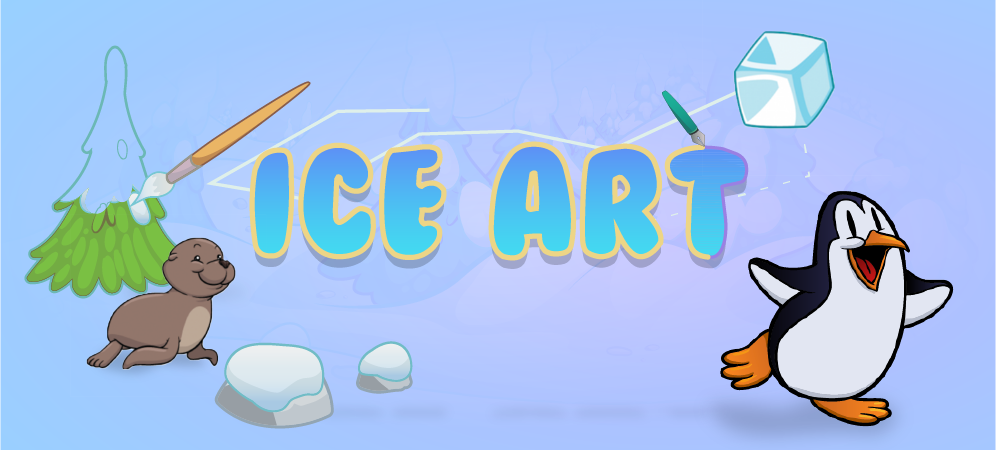
All this snow and cold is keeping everyone inside! If you have access to a computer on these snow days, consider having your student work on this Ice Art project in Tynker! It is a great way to practice your coding and problem solving skills!
The Dodgeball games were a great way to introduce Tynker to the students. Each pair added actors, or the characters, a background and another object such as a treasure chest. Each "actor" needing coding, and the students worked to have their characters move about the screen of the tablet when the tablet is being tilted. We had a great discussion about the gyroscope sensor in the tablets and in smart phones. It is what makes the tablet know that it is being tilted, and therefore, makes the game possible! Ask your student about how this works and see what they have to say!
Our Dodgeball games have been so much fun to see. There have been may customized versions of the game that the students have come up with, including some hand drawn characters. I am so impressed with the focus and creativity that these 5th graders are showing. You as families and loved ones should be so proud!
This week, we will begin a new coding project. Again using Tynker, we will be exploring the idea of setting parameters in a game, and coding user input to set these parameters by creating a "Dinosaur Ecosystem." This is a trickier bit of code, and may cause some frustration. The students will be working independently on this program, but it doesn't mean that we won't be using our new collaboration skills to help each other out, and move forward!
All this snow and cold is keeping everyone inside! If you have access to a computer on these snow days, consider having your student work on this Ice Art project in Tynker! It is a great way to practice your coding and problem solving skills!
Tuesday, January 8, 2019
Back at work and learning Tynker!
It is our first full week back after our break, and we are moving full steam ahead with our coding projects! Last week, we learned the basics of using Tynker on our tablets, by working through a video as a class, and exploring the different functions of Tynker with our partners.
We also had an introductory lesson on coordinate planes, and the (x,y) system.
A few of the students were puzzled as to why we were learning such a "mathy" thing in Digital Literacy! I thought this was an excellent question, and it gave us a great opportunity to talk about how many of our classroom subjects are related, and sometimes in the early steps of a project, it is hard to understand what each piece of the puzzle means, or why it is important. As a class, we will be completing three different computer programs using Tynker. In Tynker, when you place an actor, or character on the coding screen called the stage, it is placed by the coordinates, or (x,y) values. It is important to learn about this grid system as our codes become more complicated, so that we can figure out how to make our actors move in specific ways on our stage.
This week, we will be creating a Dodgeball game in Tynker using our tablets. We will be practicing Pair Programming, which is a technique where programmers work together at one workstation. One, the driver, writes code while the other, the navigator, reviews each line of code as it is typed in. The two programmers switch roles frequently. This is great way to learn new programs, and helps new coders catch mistakes, and make corrections quickly. It is also a great way to learn how to be a great partner. We will be practicing Pair Programming throughout the rest of the year.
We also had an introductory lesson on coordinate planes, and the (x,y) system.
A few of the students were puzzled as to why we were learning such a "mathy" thing in Digital Literacy! I thought this was an excellent question, and it gave us a great opportunity to talk about how many of our classroom subjects are related, and sometimes in the early steps of a project, it is hard to understand what each piece of the puzzle means, or why it is important. As a class, we will be completing three different computer programs using Tynker. In Tynker, when you place an actor, or character on the coding screen called the stage, it is placed by the coordinates, or (x,y) values. It is important to learn about this grid system as our codes become more complicated, so that we can figure out how to make our actors move in specific ways on our stage.
This week, we will be creating a Dodgeball game in Tynker using our tablets. We will be practicing Pair Programming, which is a technique where programmers work together at one workstation. One, the driver, writes code while the other, the navigator, reviews each line of code as it is typed in. The two programmers switch roles frequently. This is great way to learn new programs, and helps new coders catch mistakes, and make corrections quickly. It is also a great way to learn how to be a great partner. We will be practicing Pair Programming throughout the rest of the year.
Subscribe to:
Posts (Atom)
-
It has been a busy couple of weeks here at the DAMS Digital Literacy class! On Friday, I will be volunteering at the Fall Festival-I hope t...
-
Last week, I challenged my wonderful 5th grade students to do their best to make me laugh! I have included a few of my favorites below, ...
-
 Welcome to Digital Literacy! There is so much information that is coming at parents right now, so I will keep my greeting as short and to...

